From EV Adoption to infrastructure returns
The electrification of transportation in the United States has moved beyond early adoption and into operational scale. As vehicle penetration increases, charging infrastructure becomes a structural necessity rather than a discretionary investment.
For investors, this transition shifts value creation away from vehicle manufacturing and toward well-located, professionally operated charging infrastructure with durable demand characteristics.
The EV Market Has Crossed the Inflection Point
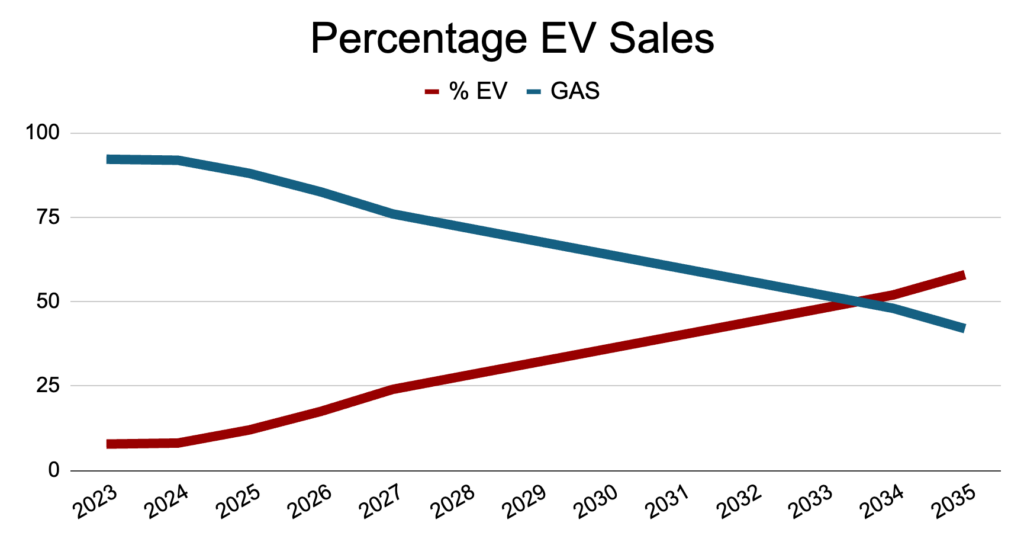
U.S. EV sales surpassed 1.6 million units in 2024, exceeding 10% of new vehicle sales. At this penetration level, EV adoption becomes self-reinforcing and infrastructure demand accelerates
Historical infrastructure transitions—from broadband to renewable power—show that once penetration crosses this threshold, utilization grows faster than deployment.
Operational Control Drives Returns
EV charging infrastructure is not a passive asset class. Site selection, uptime, pricing strategy, software integration, and maintenance quality directly determine revenue capture, cost efficiency, and asset longevity.
Funds that retain direct operational control—rather than outsourcing operations—are better positioned to optimize utilization, manage costs, and adapt pricing as demand evolves.
This operational leverage is a primary driver of outperformance in EV charging infrastructure.
Charging infrastructure is the limiting factor
While vehicle adoption accelerates, deployment lags due to permitting timelines, grid interconnection constraints, and operational complexity—creating localized scarcity in high-demand areas.
This imbalance creates attractive economics for existing and newly deployed charging assets in high-demand locations, characterized by:
Rising utilization rates
Long asset lifespans
Increasing pricing flexibility over time
For infrastructure investors, scarcity—not novelty—drives returns.

Commercial and fleet charging drives predictable utilization
Commercial properties and fleet operators adopt EVs earlier than private consumers due to predictable duty cycles, centralized parking, and total cost of ownership advantages.
For infrastructure owners, this translates into higher baseline utilization and reduced demand volatility from the outset.
These characteristics result in:
Faster ramp-up periods
Higher session frequency per charger
Lower revenue volatility
For infrastructure funds, this demand profile supports earlier cash generation and more stable long-term revenue.